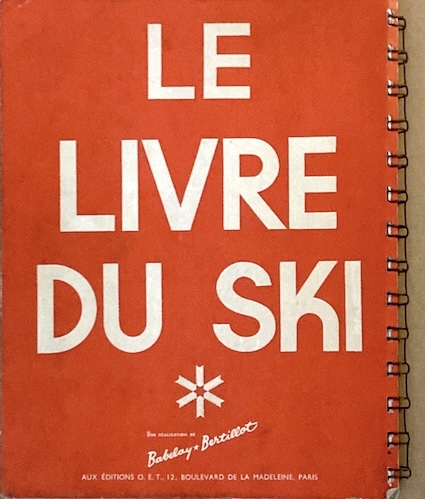
Here is the cover of a book I just found in London. It is a travel guide to ski resorts in France from 1936, and sponsored by the railway companies. It’s a lovely piece of design with fabulous alpine photographs and editorial about ski technique, winter sports fashions, the health benefits of mountain air and winter sunshine etc. The design and art-direction are terrific too.
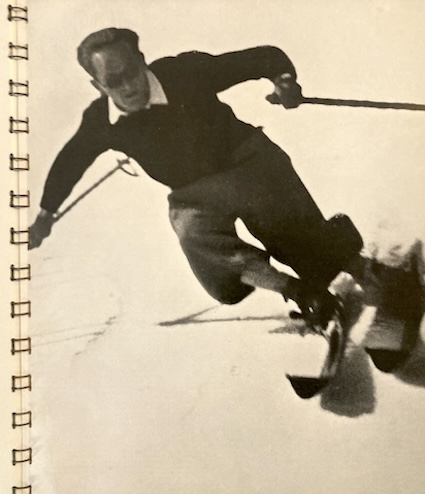
Here is the text of my original post on New Pamphleteer…
I’ve posted before about my interest in spiral, or wire-bound, books. The spiral wire binding was patented in the 1920s and was immediately of interest to the publishers and designers who had begun to use photographic images in new and exciting ways.
The smaller hand-held and high quality cameras of the 1920s, by Leica especially, are acknowledged as having created a new way of seeing and a more-or-less cybernetic extension of the intelligent eye. The spiral binding was, in my opinion, as significant in promoting these new kinds of images to a wider public, and in marking the beginnings of modern art-direction in graphic design and magazines especially.
The wire binding allowed for the pages of a document to be opened flat, and for photographic images to spread seamlessly across the centrefold. This produced a much bigger and wider image. A sort of print culture version of cinemascope…
Without being a winter sports fan I have collected a few books that feature the development of alpine ski techniques and winter holidays….I’m more interested in the style and image culture of winter sports than in the sports themselves.
This French book is from 1936, and is the first edition of a winter sports guide produced in association with the French railways. It’s a sort of atlas of resorts and is designed, magazine style, to combine sports, fashion and beauty against the dramatic, pin-sharp and exciting backdrop of the high mountains. Parts of the lay-out are quite experimental, especially in how the use of type, image and space are combined.
The promotion of Alpine resorts and of winter sports to a wider audience in France, during the 1930s and especially after WW2, provided a huge boost to the domestic leisure and tourist economies of France. The Grenoble winter Olympics of 1968, internationally televised for the first time, further popularised this combination of sport, sunshine and style.
It’s worth noting that the bright light and clear air of the mountains produced the ideal circumstances for outdoor fashion shoots. These shoots were enhanced, in France and America, through association with popular-cultural celebrity. It’s not surprising that a specialist mountain photography scene emerged to feed this demand.
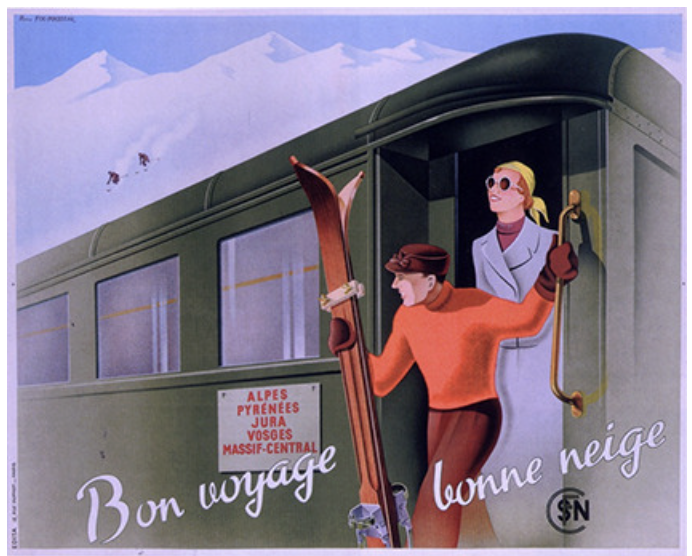
For me, the combination of design, fashion-image and railways is a sort of jackpot. I also love the combination of speed and style in these images and page spreads. Perfect.