Railway publishing is a thing. The 19C railway journey provided the perfect environment for reading…and gave rise to a particular kind of writing that was exactly matched to the circumstances of the journey. The new railway novel was self-assuredly sensational, and combined both pace, feeling and form so as to be read on the train. The railway platform provided a practical and convenient new context for selling books (WH Smith) and for promoting books through the design of their covers. In addition to displaying well, the new pictorial covers could be recognised whilst being read. In the 20C, the idea of serious-minded paperback publishing occurred to Allen Lane, founder of Penguin Books, on the station platform at Exeter in the early 1930s. In addition, the technical detail and complexity of the railway machinery have provided a compelling subject matter of many books.
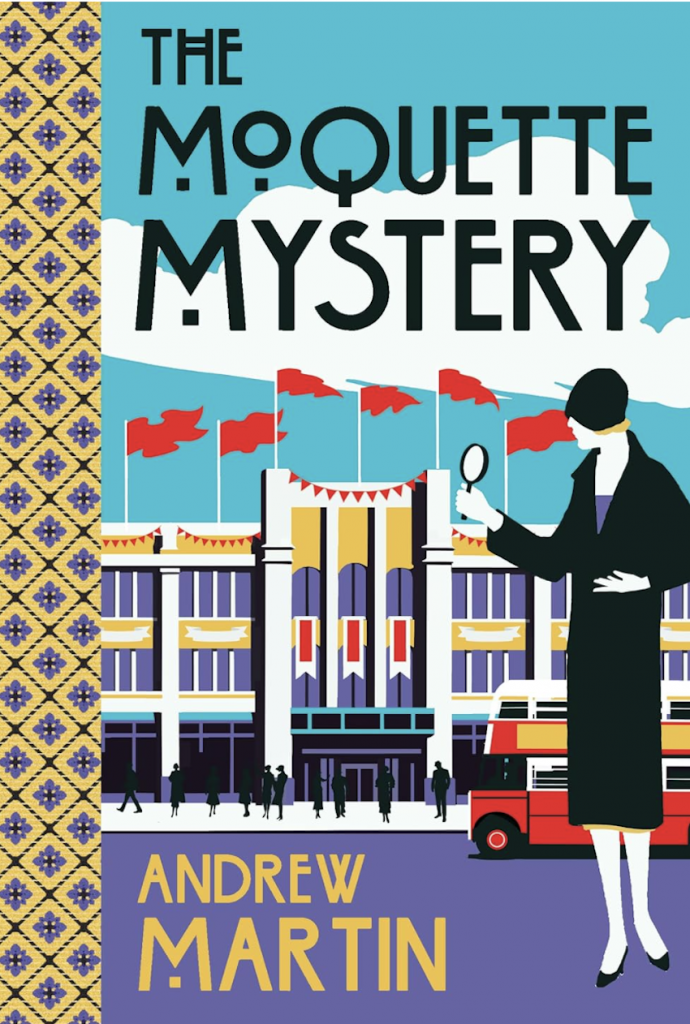
I was given a copy of Andrew Martin’s new whodunit for Christmas. I enjoyed reading it, especially as it connected to many of my own interests…Andrew Martin is a writer who works across fiction and non-fiction, and nearly always with a connection to railways, and to murder-mystery.
Andrew Martin’s story is set in motion when the London police are sent a piece of patterned furnishing fabric as a clue to a murder that is about to be carried out. The police are inclined to ignore this clue, but they do share it with May Mitten, working in furnishings at Quarmby and Bates, a London department store. May uses the scrap of fabric to embark on her London adventure…
It turns out that patterned moquette is the fabric used to cover the seats of busses and trains. It’s especially familiar to passengers of London Transport, whose different lines all have their own artist-designed fabric. Accordingly, the story plays out against a backdrop that includes London Transport and Franck Pick with commissions for posters and moquette and that mentions the artist designers Eric Ravilious, Edward Bawden at Morley College, and Paul Nash at the Royal College of Art, Edward Mcknight Kauffer, Marion Dorn and Enid Marx. There was even a scene, at the end of the story, set on the roof-top garden of the Kensington store, Derry and Toms. When the story leaves London, there is the opportunity to describe luxury travel in Pullman carriages. I have a poster for Derry and Toms by McKnight Kauffer in our hall.
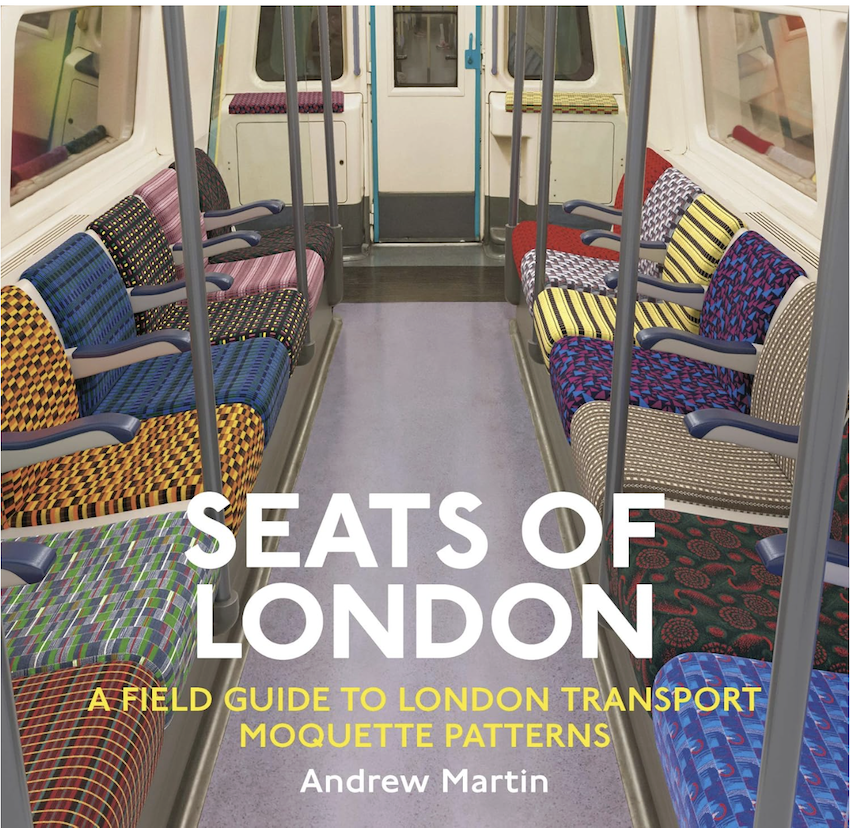
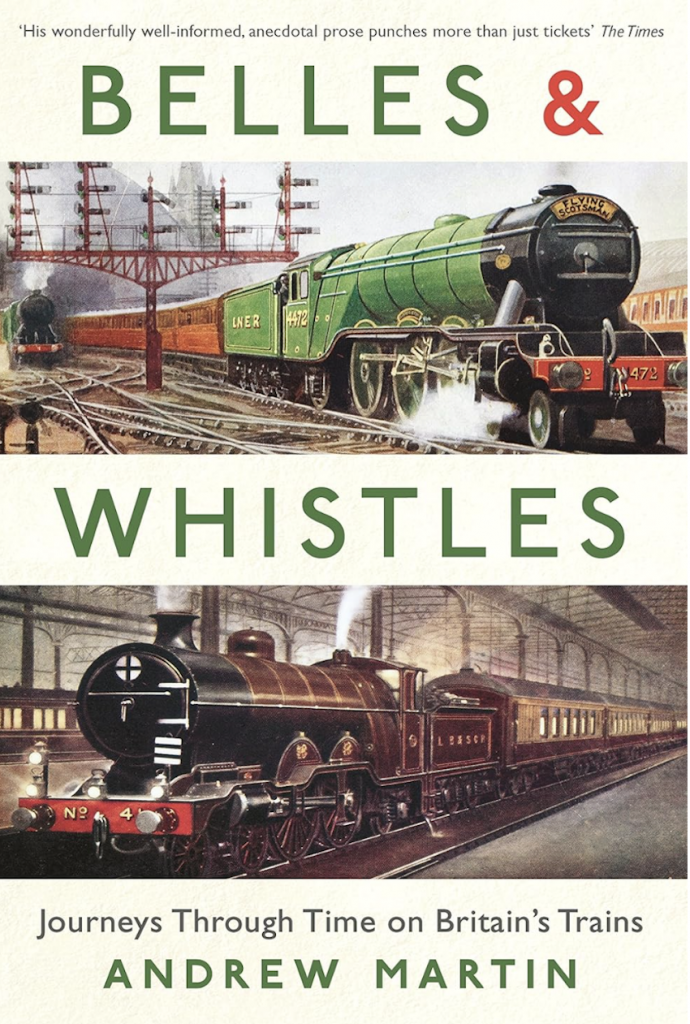
By a happy coincidence, Andrew had already published books about the different moquette designs for London Transport, and about luxry train services in Britain before WW2.
The combination of art, design, shops and railways described in this story could hardly be better for me. What a lovely and engaging present. Thank you Karen.